

I’ve been to a fair few Success Conferences over the years, but this one felt different the moment I walked through the door. I was told almost immediately that it was the busiest yet — 60 more tickets sold than the previous year. There’s always something special about being in a room full of people who just ‘get it’, and this year that feeling was stronger than ever.
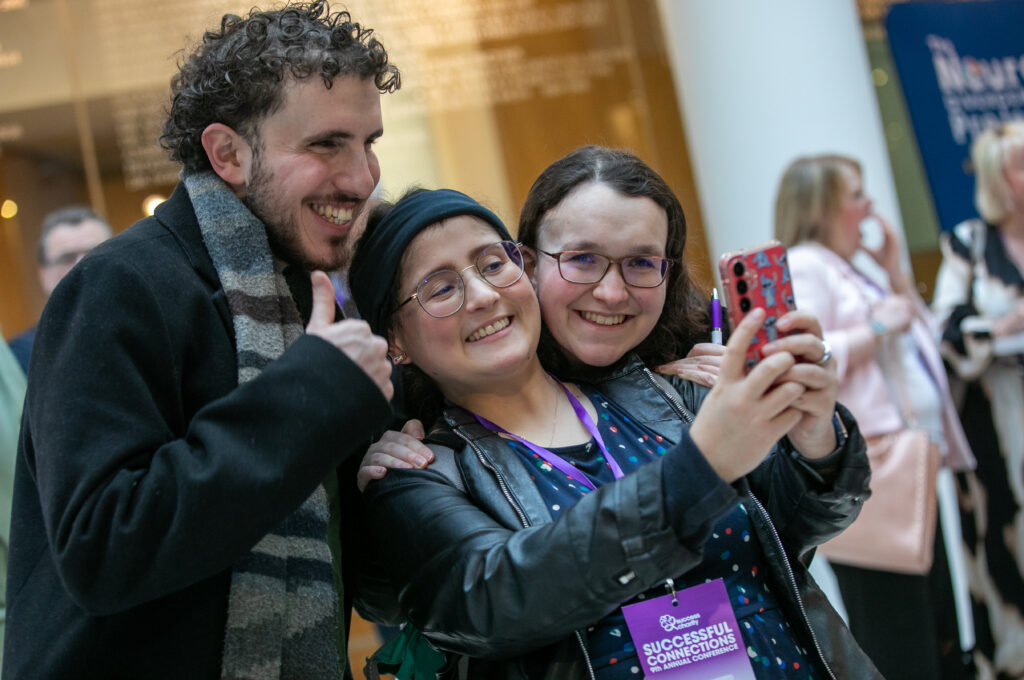
A Warm Welcome
It was wonderful to see so many familiar faces and catch up with friends, but equally lovely to meet first-timers who were experiencing the conference for the first time. Helen opened the day beautifully, introducing the origin of SUCCESS and all that it has achieved. Before she even began, we were invited to electronically submit why we were there and how we’d heard about SUCCESS. As the answers came in and a word map appeared on the screen, one name dominated it completely: Dr. Helen Spoudeas. We were all there because of her. It was a genuinely touching moment.
Morning Talks: Visual Impairment, Neurodisability and More
The first set of talks were given by professionals and themed around visual impairment, neurodisability, and their intersections. As someone with a visual impairment and a childhood tumour, I found these deeply relatable. One thing that genuinely surprised me was learning about the trends seen in adult life for those who had tumours in childhood — including the likelihood of being reliant on parents, or conversely, living independently and being single. I had never thought of these as patterns before, but as I sat and listened, I recognised so much of my own experience in the data.
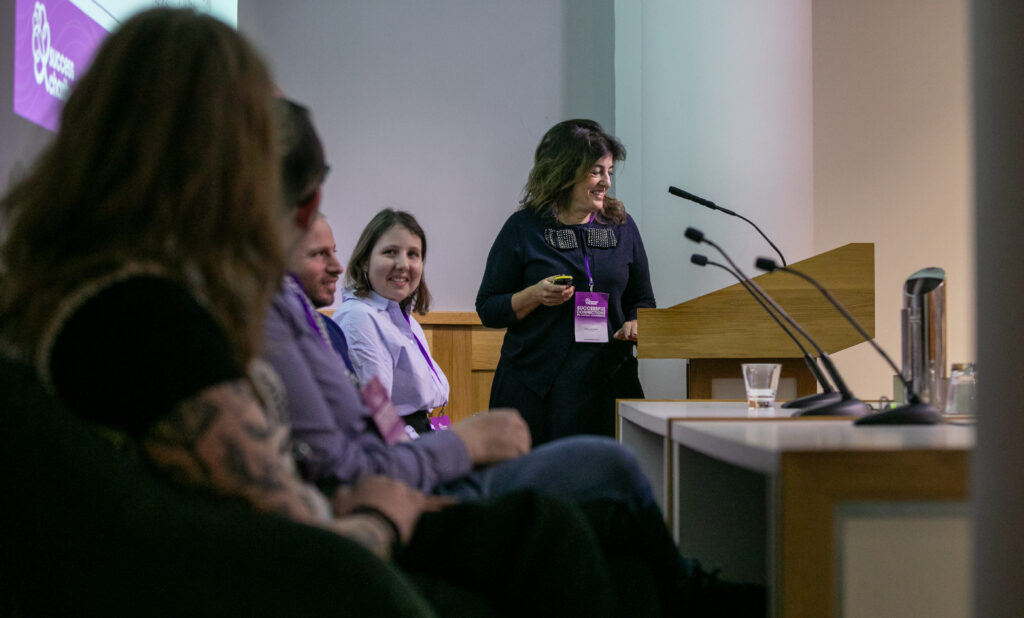
Understanding Fatigue
After the break, I chose the fatigue session over the projects session — a topic I knew was relevant to my own life. Mr Noel Davies opened with a talk called “Why So Fatigued, 33 Years After?” It was emotive, personal, and delivered with real humour and honesty. One line that stuck with me: he admitted to being jealous of cancer, quickly adding that he meant no offence. I understood exactly what he meant. A brain tumour — especially one with a complex medical name — can be so much harder to explain to others than a diagnosis people are more familiar with.
Professor Paul Gringras then spoke about hidden, treatable sleep disorders — something I had never connected to brain tumours before. I learned that falling asleep during activities, even enjoyable ones, can be a symptom worth investigating. Since COVID, these tests can now be done at home, which feels like a real step forward. The professor reassured us with some welcome humour: having the odd symptom doesn’t mean you have a sleep disorder!
Dr Jenny Limond’s talk on Brain Tumours and Acquired Brain Injury began with a fascinating interactive test: we watched a video of two teams passing balls and were asked to count the passes of the red team. At the end, we were asked whether we had spotted a gorilla running across the screen, a colour change in the background, or a player walking off. I hadn’t noticed any of these — though I got the pass count right. My friend beside me had spotted some of them, and I found myself wondering whether my visual impairment had made the task harder for me.
Jenny went on to explain how we all have different cognitive strengths and weaknesses — what she called executive functions. Cognitive fatigue, she explained, comes from the exhaustion of trying to keep pace with others. That really resonated. I struggled enormously to keep up at school, and hearing it explained in those terms helped me make sense of experiences I’d carried for years. I also learned about explicit memory — the conscious retrieval of facts and experiences — and how it is episodic memory (our personal memories, complete with emotion, time and place) that tends to be most affected in people with tumours. I am constantly forgetting things, and this gave me real context for why.
(A small aside: it did make me smile when Jenny herself forgot to include her memory slide. Sometimes the universe has a sense of humour.)
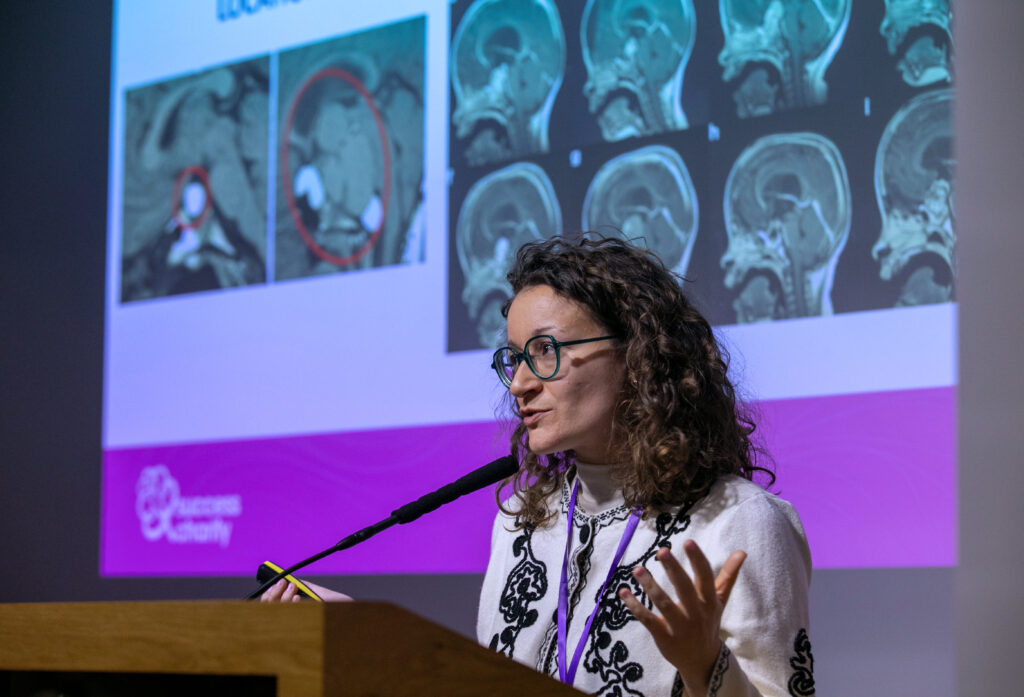
The final morning talk came from Dr Manuela Cerbone on hypothalamic endocrine injury. I learned that the hypothalamus governs a remarkable range of functions — eating, sleeping, memory, social interaction and behaviour. The tumour’s location and growth rate affect what is impacted and how severely. I was interested to hear that ADHD queries are common among those with tumours, and that many of us struggle to make friends. When there is nothing visibly ‘wrong’, it can be so much harder for others to understand. Her closing point stayed with me: mental health has the highest effect on overall well-being.
Afternoon: Conversations About Relationships and Fertility
After a lovely lunch break and some networking, the afternoon began with something a little different: a conversation between Dr S and six adult survivors, myself included. She asked each of us about our experiences with relationships and fertility. I’ll be honest — I probably had the least dramatic story to tell, having never been in a relationship — but I do have strong views on how fertility is communicated to survivors and their families, and I was glad to have the space to share them. The floor was then opened to questions, fielded by both us and Dr Nikolita.
Silk Painting, Art Kits and Staying Connected
After the panel, I slipped out with a friend to take part in some of the creative activities — including silk painting, which I loved. I also took part in some of the survivor and family interviews being recorded on the day, and sold a few of my art kits to support SUCCESS. It felt really good to give something back.
Ending on a High
The day ended, as it always does, with Dr S cutting the cake. There were further talks scheduled after this, but I needed to head home, so I made my quiet exit on that sweet note.
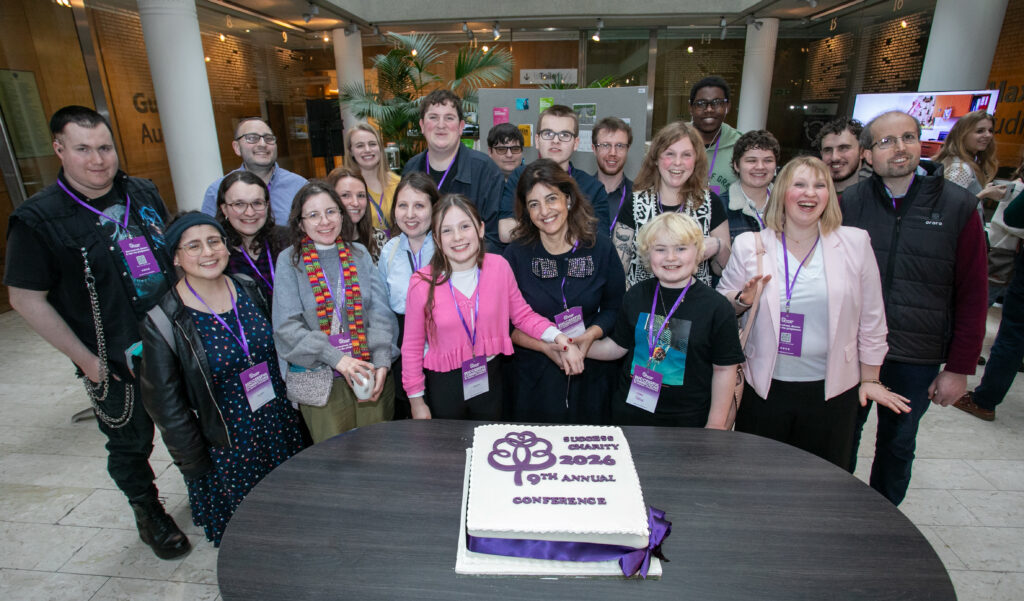
Looking back, it was a truly wonderful day. I came away having learned so much — about fatigue, memory, sleep, identity, and the many invisible ways a childhood tumour shapes a life. But more than anything, I left feeling full of warmth from being reunited with my friends and community. That’s what SUCCESS is really about: building a network, growing it, and reminding each other that we are not alone.
— Sophie Roberts, optic glioma survivor, diagnosed age 3


